


Hyperlocalise Selected for Slator Language AI 50 Under 50
Hyperlocalise has been named to Slator's 2026 Language AI 50 Under 50 — a list of the most promising new entrants shaping the future of language AI and localisation technology.
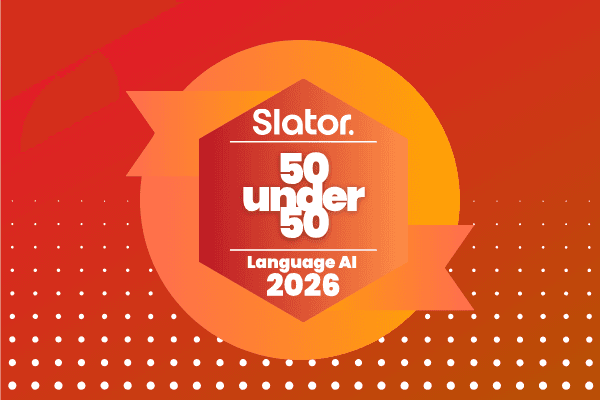
We are proud to share that Hyperlocalise has been selected for the 2026 Slator Language AI 50 Under 50 — Slator's annual list of the most promising new companies in language AI and localisation technology.
The list is a cross-section of new entrants in one of the fastest-changing corners of enterprise software. Being included alongside this year's cohort is a meaningful milestone for our team, and a reflection of the direction we believe localisation needs to take.
What the list recognises
Slator's report highlights a shift in how language AI startups are being built. Many of the companies on this year's list are not competing on translation output alone. They are building orchestration platforms that coordinate the context, terminology, governance, review, and decision-making that surround translation.
Hyperlocalise was recognised in that group. As Slator notes, we focus on automating the work around translation — context retrieval, brand consistency, UI constraints, and review decisions — rather than translation alone.
That framing matches how we think about the problem.
Translation is no longer the bottleneck for most teams. AI can produce fluent first drafts in seconds. The harder question is whether those drafts are right for the product, the brand, the market, and the customer experience in which they appear. That judgment depends on context that often lives outside the translation workflow: product surfaces, design constraints, prior reviewer decisions, terminology rules, and brand voice.
Hyperlocalise exists to make that context usable — and to turn localisation decisions into reusable intelligence over time.
A broader pattern in language AI
The 2026 cohort reflects several themes that resonate with our work:
- Orchestration over output. AI-first localisation startups are increasingly skipping the standalone "translation tool" phase and launching as platforms that govern how multilingual content moves through a product organisation.
- Learning loops. Value is shifting from generating multilingual copy to capturing accumulated language expertise — terminology, style guides, product context, and reviewer decisions — and turning it into systems that improve with use.
- Workflow ownership. The most interesting companies are not just producing translations. They are helping teams coordinate the people, systems, and decisions that determine whether localisation actually works in market.
We are building Hyperlocalise in that direction: a translation intelligence layer that helps humans and AI make better localisation decisions, with the product context they need to do it well.
Thank you
This recognition belongs to everyone who has helped shape Hyperlocalise so far — early customers, advisors, collaborators, and the team building the product every day.
If you are exploring how to move beyond translation-as-a-handoff and toward localisation that understands your product, we would love to hear from you. Join the waitlist or read more about translation intelligence.
And thank you to Slator for including us in the 2026 Language AI 50 Under 50.